



































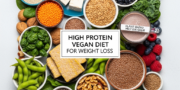


















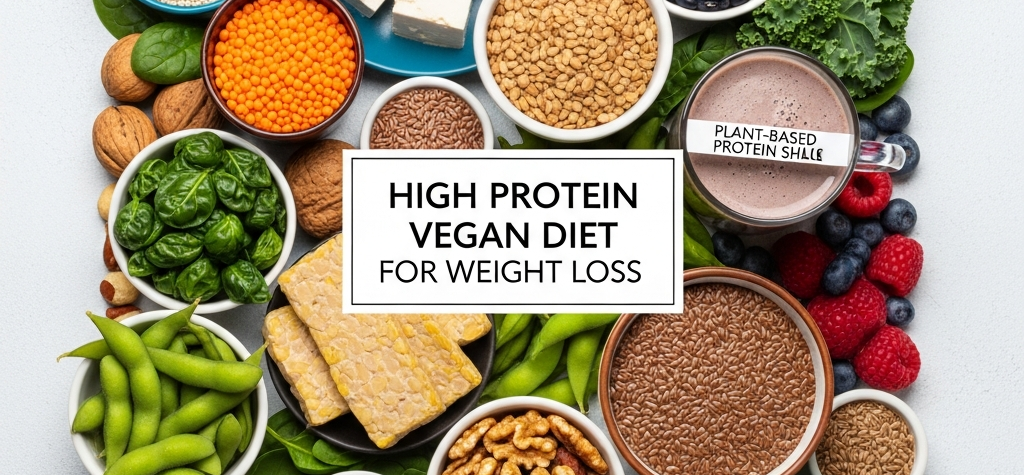
High Protein Vegan Diet for Weight Loss: Foods, Meal Plan and Evidence-Based Tips
Author: RVLNSV PRASAD
Updated On: September 2026
About Us
Author Bio
Editorial Policy
Contact Us
Introduction
The evidence is encouraging, but the answer needs some nuance.
A systematic review and meta-analysis of randomized controlled trials found that vegan diets lasting at least 12 weeks reduced body weight and BMI compared with control diets in people with higher weight or type 2 diabetes. The analysis included 11 trials and 796 participants. Systematic review and meta-analysis of vegan diets and cardiometabolic health
More recent research provides additional information.
In the 2025 VEGPREV randomized controlled trial, 90 adults with higher weight or obesity were assigned to different dietary patterns for 12 weeks. The vegan group experienced a 6.7% reduction in body weight, although this was a relatively small, short-term study and should not be interpreted as a guaranteed result for everyone. VEGPREV randomized controlled trial
A 2026 trial involving 80 adults with obesity compared a plant-based calorie-restricted diet with a conventional calorie-restricted diet. Both groups lost weight, demonstrating an important point: calorie control still matters even when the diet is plant-based. 2026 plant-based calorie-restricted diet trial
Therefore, a better conclusion is:
A high protein vegan diet can be a useful weight-loss eating pattern, but it works best when protein-rich plant foods replace higher-calorie foods and the overall diet remains nutritionally balanced.
Quick Answer
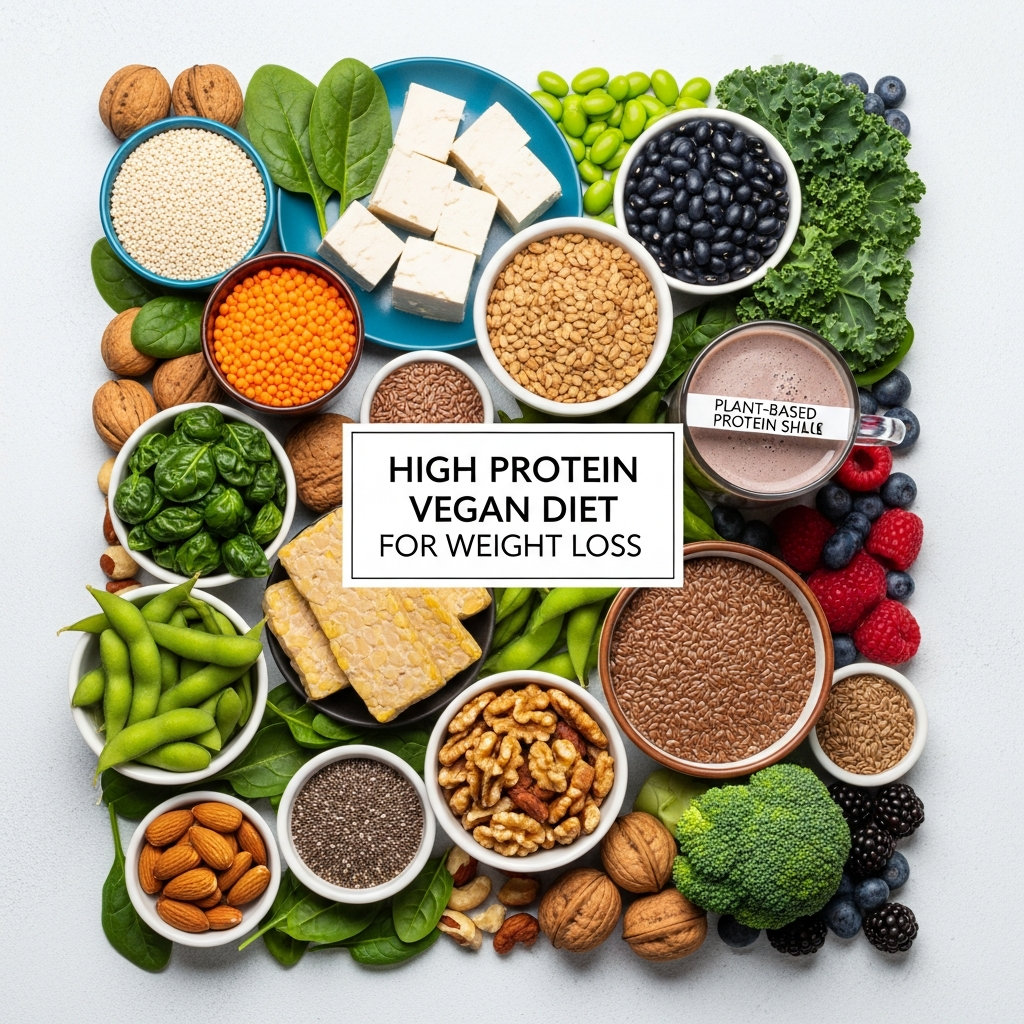
A high protein vegan diet for weight loss can support healthy weight management when it is built around protein-rich plant foods such as lentils, beans, chickpeas, tofu, tempeh, edamame and soy milk. Protein can help increase fullness and may help preserve muscle during weight loss, especially when combined with regular resistance exercise. Read the Harvard Nutrition Source guidance on protein
Research also suggests that well-planned vegan and plant-based diets can reduce body weight in some people. A 2025 randomized controlled trial found significant weight reduction in participants assigned to a vegan diet over 12 weeks, while a 2026 randomized trial showed that a structured plant-based calorie-restricted diet could also support weight loss. These findings do not mean that every vegan diet produces weight loss, because total calorie intake, food quality, physical activity and long-term adherence still matter. Read the 2025 randomized vegan-diet study Read the 2026 plant-based diet study
The most practical approach is to make a plant protein source the anchor of each meal, add plenty of vegetables, choose sensible portions of whole-food carbohydrates and include small amounts of healthy fats. A strict vegan diet also requires attention to nutrients such as vitamin B12, iron, iodine, calcium and vitamin D. Read NIH guidance on vitamin B12
In simple terms, you do not need to remove rice, potatoes, fruit or other healthy carbohydrate foods to lose weight. The goal is to create balanced, satisfying meals that you can continue eating consistently.
Key Takeaways
- A high protein vegan diet can support weight loss, but being vegan alone does not guarantee weight loss.
- Protein-rich plant foods such as lentils, beans, chickpeas, tofu, tempeh and edamame should form the foundation of many meals.
- Protein can increase fullness, which may make it easier to control overall food intake. Read the evidence on protein and appetite
- Adequate protein may help preserve muscle during weight loss, particularly when combined with resistance training. Read the protein and muscle-preservation research
- Whole grains and healthy carbohydrates do not need to be eliminated. Portion size and overall dietary balance are more important.
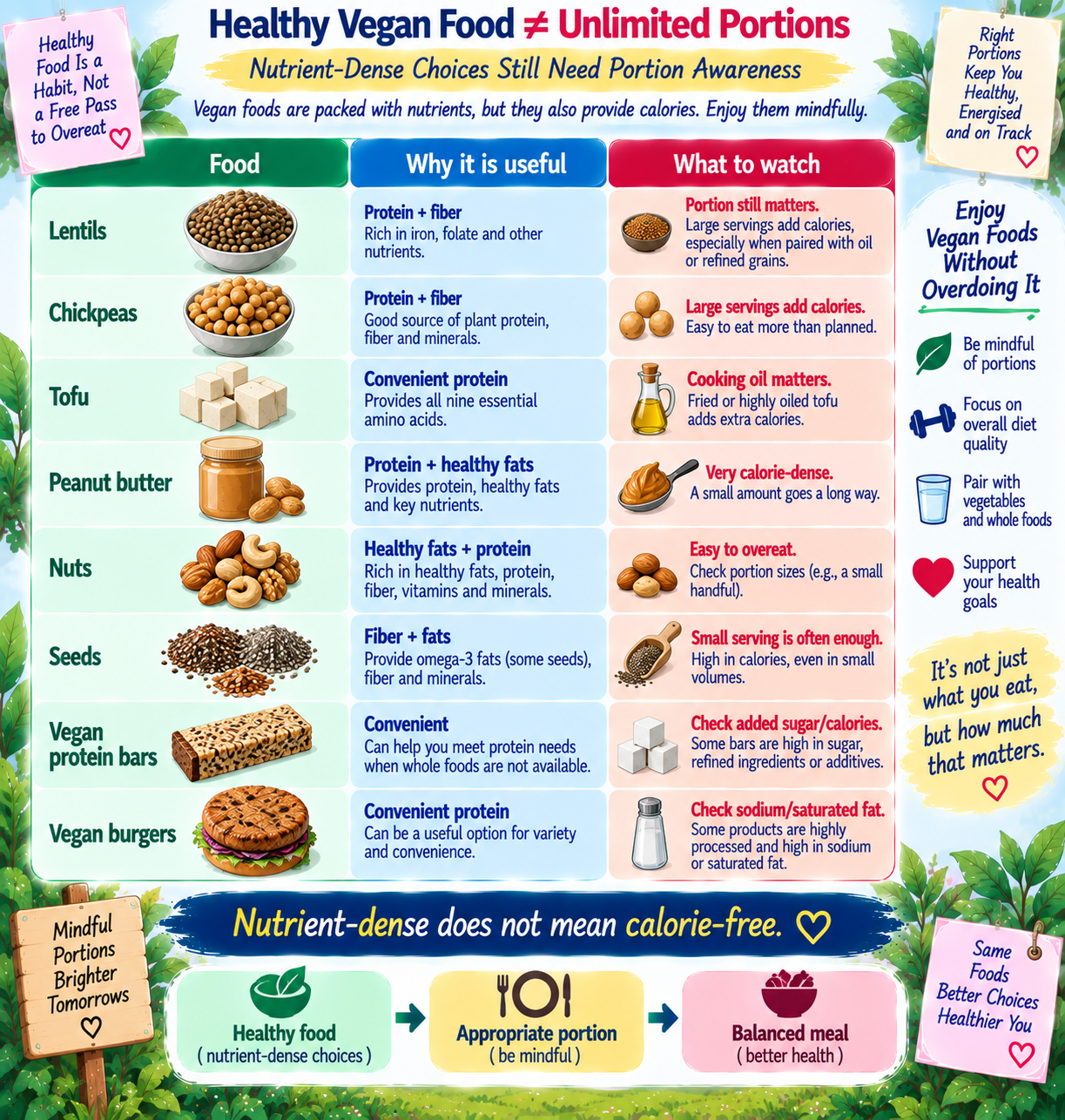
- Nuts, seeds, peanut butter and tahini are nutritious but calorie-dense, so reasonable portions matter.
- Vegan processed foods are not automatically healthy. Check calories, saturated fat, sodium, added sugar and protein rather than relying on the word “vegan.”
- Vitamin B12 deserves special attention because reliable natural food sources are limited in a strict vegan diet. Read the NIH vitamin B12 fact sheet
- Iron needs careful planning, because plant foods provide non-heme iron, which is absorbed differently from heme iron. Vitamin C can improve absorption of non-heme iron. Read the NIH iron fact sheet
- Iodine, calcium and vitamin D should also be considered when planning a long-term vegan eating pattern. Read NIH iodine guidance
- You cannot specifically target belly fat with a particular food or vegan diet. Overall fat loss is what reduces body fat around the waist.
- You do not need an extreme diet. A repeatable meal structure is usually more practical than strict rules.
- The best plan is one you can maintain. Consistency, adequate nutrition, appropriate portions and regular physical activity matter more than finding a “perfect” vegan diet.
The Best High Protein Vegan Foods for Weight Loss
Not every vegan protein food serves the same purpose. Some provide protein and fiber, while others are concentrated sources of protein with fewer carbohydrates.
1. Lentils
Lentils are one of the most practical foods for a high protein vegan meal plan.
They provide protein, fiber, iron and several other nutrients. Their combination of protein and fiber can make meals more filling.
Try lentils in:
- Dal
- Lentil soup
- Salads
- Grain bowls
- Vegetable curries
2. Chickpeas
Chickpeas provide protein and fiber and work well in both Indian and international meals.
You can use them in:
- Chana curry
- Hummus
- Chickpea salad
- Roasted chickpeas
- Grain bowls
Legumes such as beans and chickpeas can support fullness because of their protein and fiber content. Harvard Nutrition Source — Legumes and Pulses
3. Beans
Kidney beans, black beans, black-eyed peas, mung beans and other varieties can become regular protein sources.
Instead of treating beans only as a side dish, make them the main protein component of the meal.
4. Tofu
Tofu is one of the most versatile vegan protein foods.
It can be:
- Stir-fried
- Grilled
- Added to curries
- Crumbled into a scramble
- Added to soups
- Baked with spices
Soy foods are also useful because soy provides a relatively high-quality plant protein.
Harvard’s Nutrition Source identifies tofu and other soy foods as nutrient-dense plant protein choices. Harvard Nutrition Source — Choosing healthy protein foods
5. Tempeh
Tempeh is a fermented soy food with a firm texture.
It can be sliced and cooked with vegetables, added to wraps or used as the protein component of a bowl.
6. Edamame
Edamame provides protein, fiber and other nutrients.
It can work particularly well as:
- A snack
- Salad topping
- Stir-fry ingredient
- Side dish
7. Seitan
Seitan is a concentrated plant protein made primarily from wheat gluten.
It can be useful for people who tolerate gluten and want a higher-protein meat alternative.
People with celiac disease or medically diagnosed gluten-related disorders should avoid it.
8. Soy Milk
Unsweetened fortified soy milk can provide protein and may also provide calcium and vitamin D when fortified.
Check the nutrition label because nutrient levels vary between products.
9. Quinoa
Quinoa provides protein and can complement legumes and vegetables.
It is useful in:
- Breakfast bowls
- Salads
- Vegetable bowls
- Stuffed vegetables
Quinoa should not be treated as a magical weight-loss food. Its value comes from fitting into a balanced meal.
10. Peanuts and Peanut Butter
Peanuts and peanut butter provide protein and healthy fats.
The catch is portion size.
A large spoonful of peanut butter can add considerably more calories than expected, so use it as a measured ingredient rather than eating directly from the jar.
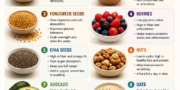
11. Chia and Hemp Seeds
Seeds can add protein, fiber and unsaturated fats.
They are particularly useful in:
- Oatmeal
- Smoothies
- Chia pudding
- Salads
However, seeds are calorie-dense, so “healthy” does not mean “unlimited.”
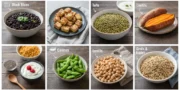
High Protein Vegan Foods at a Glance
| Food | Main advantage | Easy use |
|---|---|---|
| Lentils | Protein + fiber | Dal, soup |
| Chickpeas | Protein + fiber | Curry, salad |
| Beans | Protein + fiber | Bowl, curry |
| Tofu | Versatile protein | Stir-fry, curry |
| Tempeh | Concentrated soy protein | Stir-fry |
| Edamame | Protein + fiber | Snack, salad |
| Seitan | High protein | Wraps, stir-fry |
| Soy milk | Convenient protein | Breakfast |
| Quinoa | Protein + whole grain | Bowl, salad |
| Peanuts | Protein + healthy fats | Snack, chutney |
| Hemp seeds | Protein + fats | Oatmeal, smoothie |
| Chia seeds | Fiber + protein | Pudding, oats |
How to Build a High Protein Vegan Meal
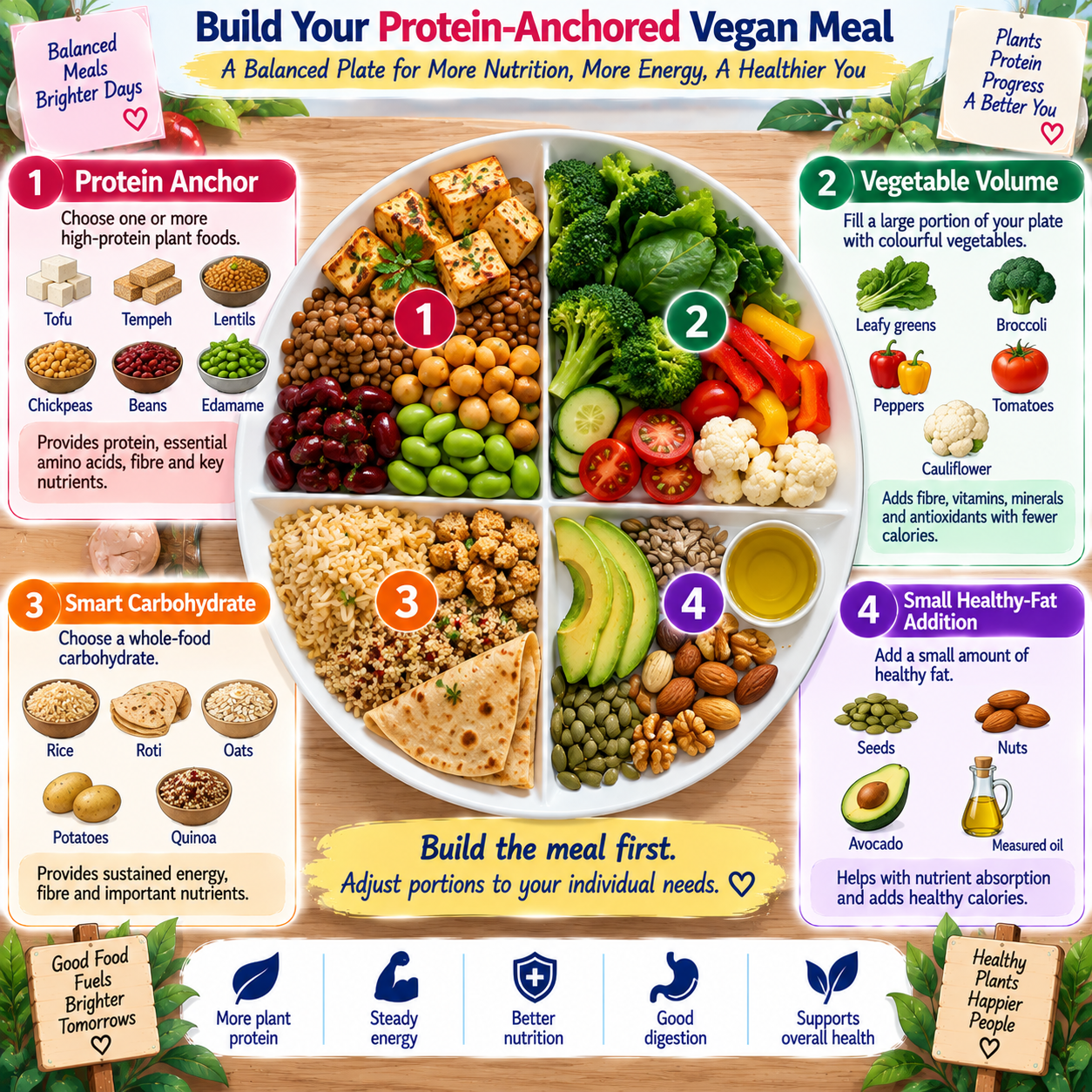
One of the simplest approaches is to stop thinking about individual foods and start thinking about meal architecture.
Build your plate using four parts:
Protein + vegetables + high-quality carbohydrate + healthy fat
For example:
Lunch: tofu + mixed vegetables + brown rice + small amount of sesame
Dinner: lentils + vegetables + roti + salad
Breakfast: oats + fortified soy milk + chia seeds + fruit
This approach is easier to maintain than trying to make every meal extremely low in carbohydrates.
Harvard recommends emphasizing vegetables, whole grains, healthy fats and plant protein sources such as tofu, tempeh, legumes, nuts and seeds as part of a healthy eating pattern. Harvard Nutrition Source — Preventing Obesity
A Simple High Protein Vegan Meal Plan for Weight Loss
This is an example framework rather than a personalized calorie prescription.
Breakfast
Protein oats
- Oats
- Unsweetened fortified soy milk
- Chia seeds
- Berries or another whole fruit
- Small amount of peanut butter
The important change is adding a meaningful protein source rather than eating plain carbohydrate alone.
Mid-Morning
Edamame or fruit with a small handful of nuts
Choose the portion according to your hunger and overall calorie needs.
Lunch
Lentil and vegetable bowl
- Cooked lentils
- Mixed vegetables
- Brown rice or another whole grain
- Lemon
- Herbs and spices
Adding vitamin-C-rich foods such as tomatoes, peppers or lemon-containing foods can also be useful when meals contain plant-based iron.
Evening Snack
Roasted chickpeas
Choose a lightly seasoned version rather than one loaded with oil and salt.
Dinner
Tofu vegetable curry
- Tofu
- Spinach or other greens
- Mixed vegetables
- Tomato-based sauce
- One or two appropriate servings of whole-grain carbohydrate
Optional Dessert
Whole fruit
Fruit does not need to be removed from a weight-loss diet.
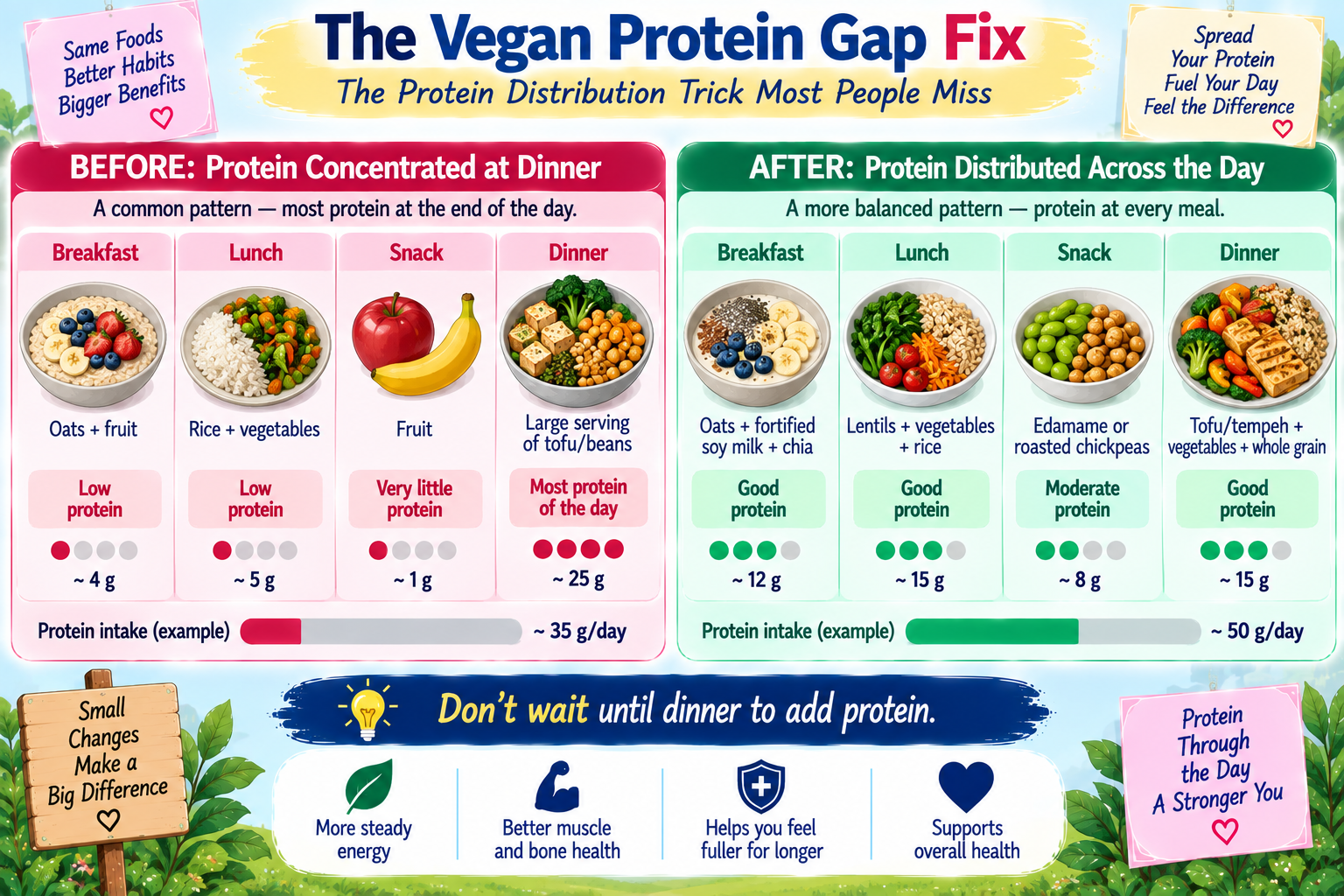
The Protein Distribution Trick Most People Miss
One useful strategy is to avoid eating almost all of your protein at dinner.
Instead, distribute protein across the day.
For example:
Breakfast: soy milk + oats + seeds
Lunch: lentils or chickpeas
Snack: edamame
Dinner: tofu or tempeh
This creates several opportunities to include protein rather than trying to consume a huge amount in one meal.
Your exact protein requirement depends on body size, age, activity, health status and goals. The general adult RDA is 0.8 g/kg/day, while higher amounts may be appropriate in some circumstances, particularly during calorie restriction or resistance training. Individual targets should be personalized rather than copied from a generic internet diet plan. Harvard Nutrition Source — Protein requirements
A People-First Insight: Make Protein the Anchor, Not the Entire Meal
One mistake I often see in weight-loss content is treating protein as though the entire diet should revolve around it.
That can make meals unnecessarily restrictive.
A more practical approach is to make protein the anchor of each meal.
For example, instead of asking:
“Which food contains the most protein?”
ask:
“What protein food will make this meal satisfying and nutritionally balanced?”
That small change can make a vegan weight-loss plan easier to follow.
A lentil curry with vegetables and a sensible portion of rice can be more useful in real life than an expensive protein bar that contains a long list of ingredients.
Unique Easy-to-Do Strategies for Real Life
The Two-Protein Rule
When a meal looks low in protein, add a second plant protein.
For example:
Rice + vegetables → add lentils
or
Oats + fruit → add soy milk and chia
or
Salad → add chickpeas and tofu
This does not require complicated calculations.
The Protein-First Shopping Rule
When shopping, choose your protein foods before buying snacks.
A simple weekly basket might contain:
- Lentils
- Chickpeas
- Beans
- Tofu
- Tempeh
- Soy milk
- Edamame
- Oats
- Vegetables
- Fruit
- Whole grains
- Seeds
This makes healthy meals easier to assemble when you are busy.
The Emergency Meal Rule
Keep one meal that can be prepared in less than 10 minutes.
For example:
Microwave brown rice + canned beans + frozen vegetables + tofu + spices
This is more realistic than assuming every meal will be freshly prepared from scratch.
The Sauce Check
A healthy meal can become calorie-heavy because of sauces, oils and dressings.
You do not need to eliminate them.
Instead, measure them.
This is especially important with:
- Peanut butter
- Tahini
- Coconut milk
- Cooking oil
- Vegan mayonnaise
- High-calorie dressings
Common Mistakes on a High Protein Vegan Diet
Mistake 1: Eating Too Many Vegan Processed Foods
Vegan does not automatically mean nutritious.
Some plant-based burgers, desserts, chips and packaged snacks can be high in calories, sodium or saturated fat.
A 2025 secondary analysis of a randomized clinical trial examined processed-food intake during a vegan intervention and found that weight loss occurred in the vegan group. However, this does not mean all processed vegan foods are ideal; food quality still matters. 2025 study of vegan diets, processed foods and body weight
Mistake 2: Eliminating All Carbohydrates
Beans, lentils, fruit, oats, potatoes and whole grains contain carbohydrates.
They can still fit into a weight-loss diet.
The better approach is to control portions and emphasize minimally processed carbohydrate sources.
Mistake 3: Eating Huge Portions of Nuts
Nuts are nutritious, but they are energy-dense.
A small measured portion can be useful. Eating several handfuls while watching television can quietly add a large amount of energy.
Mistake 4: Assuming Protein Automatically Burns Fat
Protein supports fullness and can help preserve lean mass, but it does not directly “melt fat.”
Fat loss occurs when the body consistently uses more energy than it receives.
Mistake 5: Ignoring Vitamin B12
This is one of the most important nutritional issues for strict vegans.
NIH’s Office of Dietary Supplements notes that people who eat little or no animal foods can have difficulty getting enough vitamin B12 because natural food sources are limited mainly to animal foods. NIH Office of Dietary Supplements — Vitamin B12
Fortified foods or a suitable B12 supplement may therefore be necessary.
Mistake 6: Ignoring Iron
Plant foods contain non-heme iron, but it is absorbed differently from heme iron.
NIH notes that people following vegetarian diets may require more dietary iron because non-heme iron has lower bioavailability. Vitamin C can improve absorption of non-heme iron. NIH Office of Dietary Supplements — Iron
Good vegan iron sources include:
- Lentils
- Beans
- Chickpeas
- Tofu
- Fortified cereals
- Pumpkin seeds
- Spinach
Pairing these foods with vitamin-C-rich vegetables or fruit can be a useful strategy.
Important Nutrients to Watch on a Vegan Weight-Loss Diet
Weight loss should never come at the expense of nutritional adequacy.
| Nutrient | Vegan sources/strategy | Why it matters |
|---|---|---|
| Vitamin B12 | Fortified foods or supplement | Red blood cells and nervous system |
| Iron | Lentils, beans, tofu, fortified foods | Oxygen transport |
| Calcium | Fortified plant milk, tofu, greens | Bones and muscle |
| Vitamin D | Fortified foods, sunlight where appropriate, supplement when indicated | Bone and overall health |
| Iodine | Iodized salt and appropriate fortified sources | Thyroid hormone production |
| Omega-3 | Flax, chia, walnuts; algae-based DHA/EPA when appropriate | Essential fatty acids |
| Zinc | Beans, seeds, nuts, whole grains | Immune and cellular functions |
Iodine deserves particular attention because people following vegan diets may consume fewer major iodine sources such as dairy, seafood and eggs. NIH Office of Dietary Supplements — Iodine
Iron deserves attention as well, particularly for menstruating women and people with known iron deficiency. NIH Office of Dietary Supplements — Iron
Do You Need Vegan Protein Powder?
Not necessarily.
Many people can meet their protein needs through food.
However, a plant protein powder can be convenient when:
- You have little time to cook.
- Your appetite is low.
- You exercise regularly.
- You struggle to include enough protein from meals.
- You need a convenient post-workout option.
Harvard notes that plant protein powders can include pea, soy and other plant proteins, but products vary and may contain added sugars, flavorings and other ingredients. Harvard Nutrition Source — Protein powders
Look at the complete nutrition label instead of buying a product simply because it says “vegan” or “high protein.”
How Exercise Fits Into a High Protein Vegan Diet
Diet and exercise serve different purposes.
A calorie-controlled eating pattern can help reduce body fat, while resistance exercise can help preserve or build muscle.
This distinction is particularly important during weight loss.
Research on weight loss and muscle preservation supports combining adequate protein with physical activity, especially resistance training. Review on preserving healthy muscle during weight loss
A simple weekly approach could include:
2–3 days: resistance training
Most days: walking or other enjoyable activity
Daily: normal movement such as household activities and standing breaks
You do not need an extreme workout program.
A Simple Weekly High Protein Vegan Structure
Monday
Breakfast: Protein oats
Lunch: Lentil curry + vegetables
Snack: Edamame
Dinner: Tofu stir-fry
Tuesday
Breakfast: Soy milk smoothie + chia
Lunch: Chickpea salad bowl
Snack: Fruit + measured nuts
Dinner: Bean curry + vegetables
Wednesday
Breakfast: Tofu scramble + whole-grain toast
Lunch: Lentil bowl
Snack: Roasted chickpeas
Dinner: Tempeh + vegetables
Thursday
Breakfast: Oats + soy milk + fruit
Lunch: Rajma + vegetables + rice
Snack: Edamame
Dinner: Tofu curry
Friday
Breakfast: Chia pudding + fortified soy milk
Lunch: Chickpea bowl
Snack: Fruit + peanut butter
Dinner: Lentil soup + whole grains
Saturday
Breakfast: Tofu vegetable scramble
Lunch: Bean and vegetable bowl
Snack: Roasted chickpeas
Dinner: Tempeh stir-fry
Sunday
Breakfast: Oats + seeds + fruit
Lunch: Mixed bean curry
Snack: Edamame
Dinner: Tofu and vegetable bowl
The meals can be changed according to regional foods, budget, cultural preferences and availability.
Personal-Experience Perspective: Keep the Plan Realistic
A useful personal-experience lesson from working with nutrition content is that the most impressive diet on paper is not necessarily the one people follow.
A plan that requires special ingredients, complicated recipes and perfect meal timing can fail when work becomes busy.
A better approach is to build a small collection of meals you can repeat.
For example, if lentil dal, tofu curry, chickpea salad and soy-oat breakfast are easy for you to prepare, those meals can become your foundation.
This is not a claim of personal clinical experience or a substitute for individualized dietetic care. It is a practical, people-first way to think about adherence: make healthy food easier to repeat than unhealthy food.
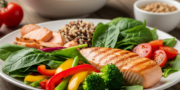
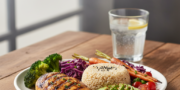
What a High Protein Vegan Weight-Loss Plate Can Look Like
Think of a simple plate:
About half: non-starchy vegetables
A protein-centered portion: lentils, beans, tofu, tempeh or another protein food
A moderate carbohydrate portion: rice, roti, oats, potatoes, quinoa or another whole-food carbohydrate
A small amount of healthy fat: seeds, nuts, avocado or an appropriate oil
This is not a rigid prescription.
Your needs may be different depending on your size, activity, medical conditions and nutritional requirements.
How to Know Whether Your Diet Is Working
Do not judge your progress from a single morning on the scale.
Instead, look at several indicators:
- Average body weight over several weeks
- Waist measurement
- Hunger levels
- Energy
- Workout performance
- Strength
- Meal consistency
- Sleep
- Ability to maintain the eating pattern
Weight can fluctuate because of hydration, sodium, carbohydrate intake, bowel contents and hormonal changes.
A slower trend can still represent meaningful progress.
When a High Protein Vegan Diet May Need Professional Guidance
Talk with a doctor or registered dietitian before making major dietary changes if you:
- Are pregnant or breastfeeding
- Have kidney disease
- Have a history of eating disorders
- Have diabetes and use glucose-lowering medication
- Have significant anemia
- Have gastrointestinal disease
- Have unexplained weight loss
- Have a diagnosed nutrient deficiency
- Are taking medications affected by major dietary changes
A high-protein diet is not appropriate for everyone in the same form.
Latest Research Developments
The newest evidence is increasingly moving away from the idea that one diet is universally superior.
A 2026 systematic review and meta-analysis of randomized trials found that plant-based diets produced little to no difference from omnivorous diets for several major outcomes, although some potential improvements in BMI, LDL cholesterol and HbA1c were observed with very low certainty for some outcomes. 2026 systematic review and meta-analysis of plant-based diets
This is an important development because it puts vegan diets into context.
The evidence does not require us to claim:
“Everyone should become vegan to lose weight.”
Instead, the stronger conclusion is:
A well-designed plant-based diet is one viable approach to weight management, particularly when it emphasizes minimally processed foods and adequate nutrition.
Another important research direction concerns protein and muscle preservation. A 2024 systematic review and meta-analysis of 47 studies involving 3,218 participants found that increased protein intake helped prevent muscle-mass decline during weight loss, although the effects on strength and physical function were less clear. 2024 protein and muscle-preservation meta-analysis
That supports a more complete strategy:
Calorie control + adequate protein + resistance exercise + nutrient adequacy + consistency
rather than simply “eat more protein.”
A Better Way to Think About Vegan Weight Loss
There are three layers.
Layer 1: Food Quality
Prioritize:
- Beans
- Lentils
- Tofu
- Tempeh
- Vegetables
- Fruits
- Whole grains
- Nuts
- Seeds
Layer 2: Protein Distribution
Include a protein source at most meals rather than trying to consume nearly all protein at dinner.
Layer 3: Energy Balance
Even nutritious vegan foods contain calories.
Weight loss still requires an appropriate overall energy balance.
Harvard’s Nutrition Source emphasizes that food quality matters for weight control while also recognizing that calorie intake remains important. Harvard Nutrition Source — The Best Diet: Quality Counts
What Not to Do
Avoid these common approaches:
- Do not eliminate all carbohydrates.
- Do not eat unlimited nuts because they are healthy.
- Do not rely entirely on protein shakes.
- Do not assume vegan packaged foods are automatically healthy.
- Do not take large doses of supplements without a reason.
- Do not promise yourself a specific amount of weight loss in a specific number of days.
- Do not try to lose weight by severely restricting food.
- Do not ignore vitamin B12.
- Do not ignore iron, iodine, calcium or vitamin D.
- Do not assume one meal plan works for every person.
Frequently Asked Questions
Does a high protein vegan diet help with weight loss?
It can. Research supports vegan and plant-based dietary patterns as one possible approach to weight management, while protein can support fullness and help preserve muscle during calorie restriction. The overall diet and energy intake still matter. Recent randomized trial of plant-based diets
What are the best high protein vegan foods for weight loss?
Lentils, chickpeas, beans, tofu, tempeh, edamame, seitan, soy milk, peas and selected nuts and seeds are useful options.
How much protein should I eat on a vegan diet?
There is no single amount that is appropriate for everyone. The adult protein RDA is 0.8 g/kg/day, but needs can be higher depending on body size, age, exercise, calorie restriction and health goals. Harvard Nutrition Source — Protein
Can I eat rice while following a high protein vegan diet?
Yes. Rice can fit into a weight-loss diet. Pairing it with lentils, beans, tofu and vegetables can create a more balanced meal.
Can vegans build muscle?
Yes. Resistance training combined with adequate protein and total energy intake can support muscle development. A vegan diet requires thoughtful selection of protein sources and adequate overall nutrition.
Is tofu good for weight loss?
Tofu can be a useful protein food because it provides protein and can replace higher-calorie or higher-saturated-fat options in many meals. Preparation still matters, because deep-frying or adding large amounts of oil can substantially increase calories.
Are nuts good for a vegan weight-loss diet?
Yes, in appropriate portions. Nuts provide protein and unsaturated fats but are calorie-dense, so portion awareness is important.
Do vegans need vitamin B12?
People following a strict vegan diet generally need a reliable source of vitamin B12 from fortified foods or supplements because natural B12 is primarily found in animal foods. NIH Office of Dietary Supplements — Vitamin B12
Can I lose belly fat with a vegan diet?
You cannot selectively choose where the body loses fat. Overall fat loss can reduce waist circumference, but there is no specific vegan food that targets belly fat.
How quickly can I lose weight?
There is no safe universal timeline. Results depend on starting weight, calorie intake, activity, adherence, medications, health conditions and other factors.
Conclusion
A high protein vegan diet for weight loss does not need to be complicated.
The strongest approach is not to search for a magical vegan food that burns fat. Instead, build meals around reliable plant protein sources such as lentils, beans, chickpeas, tofu, tempeh and edamame, then add vegetables, appropriate portions of whole-food carbohydrates and small amounts of healthy fats.
Protein can help make meals more satisfying and may help protect muscle during weight loss. Research also suggests that well-planned vegan and plant-based dietary patterns can support weight reduction in some people. However, the evidence does not show that a vegan diet automatically works for everyone.
The practical goal is therefore simple:
Choose nutritious plant proteins, eat mostly minimally processed foods, pay attention to portions, protect muscle with exercise, and make sure important nutrients such as vitamin B12, iron, iodine, calcium and vitamin D are not overlooked.
You do not have to make your diet perfect.
You need a pattern that is nutritious enough to support your health and realistic enough to follow for months and years.
Author Note
Author: RVLNSV PRASAD
This article was updated in September 2026 to improve its evidence base, clarify the relationship between protein and weight loss, correct common misconceptions about vegan diets, and provide practical food and meal-planning guidance.
The article focuses on evidence-based nutrition rather than promising rapid weight loss or recommending extreme dietary restriction.
Medical Disclaimer
This article is intended for general educational purposes and should not replace individualized medical advice, diagnosis or treatment.
Nutritional requirements vary from person to person. If you have kidney disease, diabetes, anemia, gastrointestinal disease, a history of eating disorders, are pregnant or breastfeeding, or take prescription medication, speak with your doctor or a qualified registered dietitian before making major dietary changes.
Fitness Disclaimer
Physical activity recommendations in this article are general information for adults. Exercise needs differ according to age, fitness level, injuries, medical conditions and training experience.
If you have a medical condition, significant obesity, chest pain, unexplained shortness of breath, dizziness or another concerning symptom, obtain appropriate medical guidance before beginning a new exercise program.
Strong E-E-A-T Sources
Harvard T.H. Chan School of Public Health — The Nutrition Source: Protein
Information on protein, protein requirements, plant protein sources and protein quality.
Read Harvard’s protein guidance
Harvard T.H. Chan School of Public Health — Preventing Obesity
Practical guidance on plant proteins, whole grains, vegetables, fruits and healthy eating patterns.
Read Harvard’s healthy-weight guidance
NIH Office of Dietary Supplements — Vitamin B12
Evidence-based information about vitamin B12 and people following vegetarian or vegan diets.
Read the NIH Vitamin B12 fact sheet
NIH Office of Dietary Supplements — Iron
Evidence about iron requirements, plant-based iron and absorption.
Read the NIH Iron fact sheet
NIH Office of Dietary Supplements — Iodine
Information about iodine and people who follow vegan diets.
Read the NIH Iodine fact sheet
PubMed — 2025 VEGPREV randomized controlled trial
Recent randomized evidence comparing vegan and other plant-based diets for weight and metabolic outcomes.
Read the 2025 VEGPREV study
PubMed — 2026 plant-based calorie-restricted diet trial
Recent evidence comparing a structured plant-based calorie-restricted diet with conventional calorie restriction.
Read the 2026 trial
PubMed — 2024 protein and muscle preservation meta-analysis
Evidence on increased protein intake and preservation of muscle mass during weight loss.
Read the systematic review and meta-analysis
PubMed — Vegan diets and cardiometabolic health
Systematic review and meta-analysis of randomized controlled trials examining vegan diets in people with higher weightor type 2 diabetes.
Read the systematic review
PubMed — Vegan diet, processed foods and body weight
Recent analysis examining processed-food intake and body-weight changes during a vegan dietary intervention.
Read the 2025 study
Related content
- 5 Plant-Based Meals for Healthy Weight Loss: A Comprehensive Guide
- 15 High Protein Low Carb Foods
- 12 Best Diets to Lose 100 Pounds
- 14 Ways to Increase Protein Intake Daily Tips
- Healthy Eating Meal Plan for Wellness



[…] High Protein Vegan Diet for Weight Loss […]